Ninja Foodi has quietly become the appliance people mention when they talk about the moment their kitchen routine actually got easier. The XL Air Fryer 8 Qt version in particular sits at an interesting crossroads: it looks like a simple countertop gadget, but the way it changes a weeknight dinner, a last-minute guest list, or a chaotic holiday table is anything but simple.
This guide breaks down exactly what you’re paying for, why the real-world value tends to outpace the price tag, and just as importantly the handful of habits that make sure you actually get that value once it’s sitting on your counter.
Table of Contents
What Is the Ninja Foodi XL Air Fryer 8 Qt?
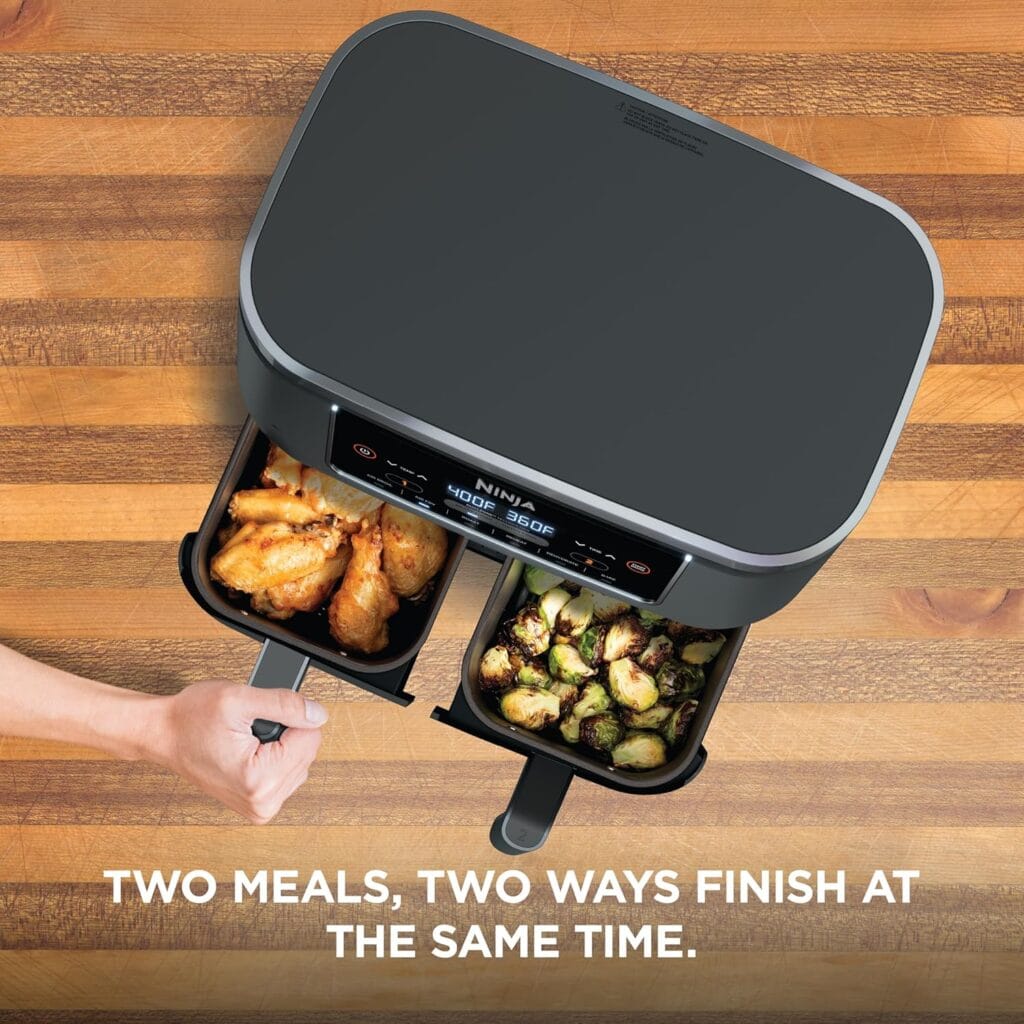
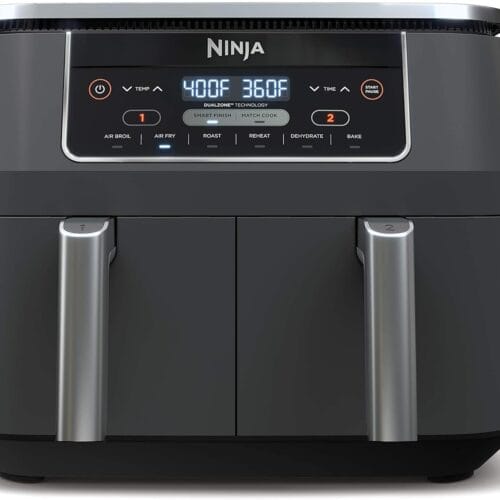
At its core, this is a countertop convection cooker built around two independently controlled cooking zones, each with its own heater and fan. That dual-zone engineering is what separates it from a basic single-basket fryer: instead of cooking one dish, waiting, then cooking the next, you run two different foods on two different settings at the same time. The 8-quart total capacity is split so you get roughly 4 quarts per zone, enough to handle a full batch of vegetables on one side and protein on the other without anything touching, steaming, or going soggy.
It runs six cooking programs — crisping, broiling, roasting, baking, reheating, and dehydrating controlled through a digital interface that’s intuitive enough to use on the first try, no manual required for the basics. For a household that wants one appliance to replace a deep fryer, a small oven, and a dehydrator, this is the category Ninja Foodi was built to dominate.
Key Features That Make Ninja Foodi XL Air Fryer 8 Qt Stand Out
The headline feature is the dual-basket setup paired with two smart cooking modes. Smart Finish times two different foods so they’re both ready at the exact same moment no more reheating one dish while the other goes cold. Match Cook mirrors one zone’s settings onto the other, effectively turning the unit into a single 8-quart fryer when you need to cook one large batch, like a full tray of wings or fries for a crowd.
Beyond that dual-zone core, a few details matter more than people expect:
– Ceramic-coated, nonstick baskets that are dishwasher-safe, which removes the single biggest complaint people have about countertop fryers: scrubbing.
– A compact footprint relative to its capacity. Ninja’s engineering keeps the unit narrower than two separate fryers would be, so it doesn’t swallow your counter.
– A rated capacity of up to roughly 4 lbs of fries or wings per zone, enough for a family meal without multiple cooking rounds.
– A straightforward digital timer and temperature control that doesn’t require a learning curve.
None of these are flashy on their own, but together they explain why the appliance gets used daily instead of getting pushed to the back of a cabinet after the first month — which is the actual measure of whether a kitchen gadget was worth buying.
Design and Aesthetics: How Ninja Foodi Elevates Your Kitchen
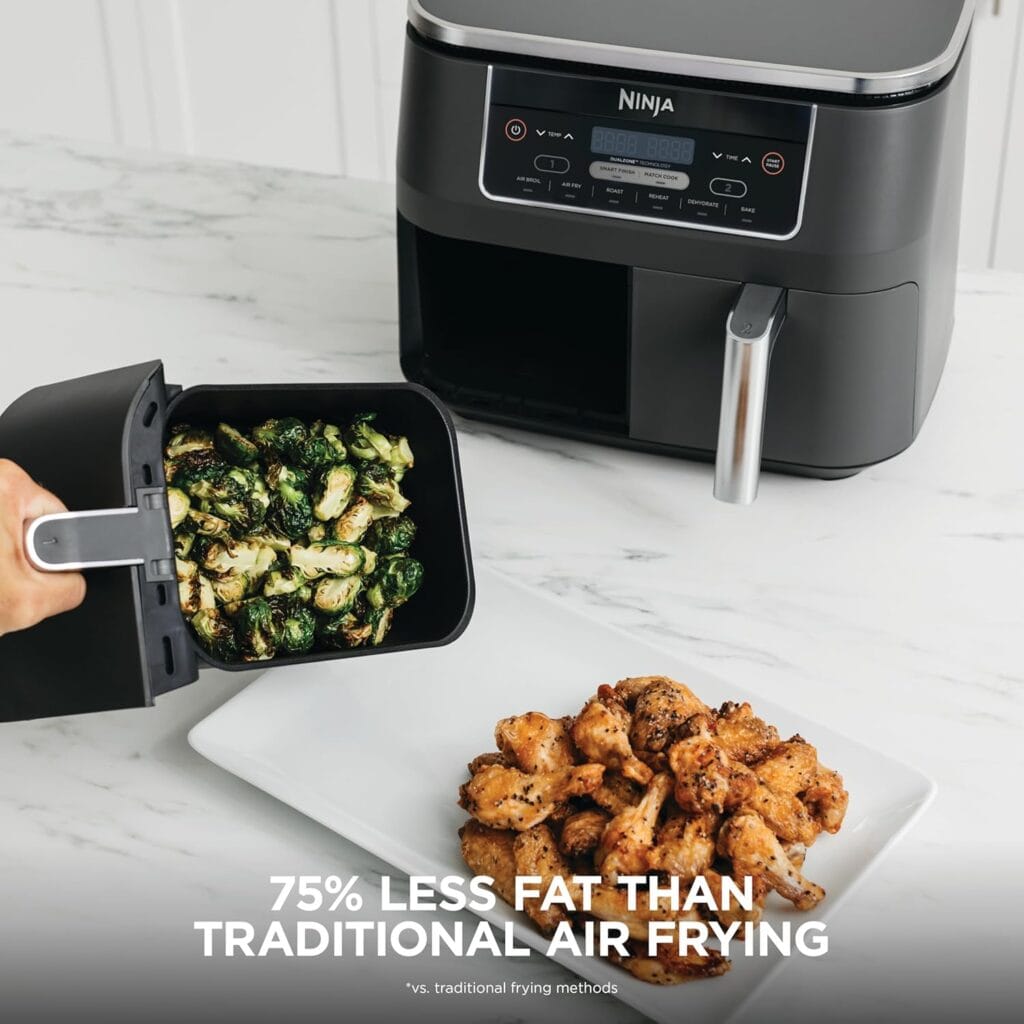
There’s a quieter reason people fall for this appliance: it looks good sitting out. The matte and stainless-steel finishes read as intentional, not utilitarian, which matters because most countertop appliances either get hidden in a pantry or become visual clutter. A unit you’re not embarrassed to leave visible is a unit you’ll actually reach for instead of avoiding the hassle of pulling it out of storage.
The control panel sits flush with clean lines and minimal buttons, avoiding the cluttered, sticker-covered look that plagues budget fryers. That matters more than it sounds kitchens are increasingly treated as living spaces, photographed and shown off, and an appliance that fits the aesthetic instead of fighting it adds value that’s hard to quantify on a spec sheet but easy to feel every time you walk into the room.
How Ninja Foodi Solves Your Biggest Time Problem
The single biggest complaint about cooking a complete meal is sequencing: the protein finishes before the side, or the side finishes and goes cold while the protein catches up. Dual-zone cooking eliminates that problem structurally rather than just promising to. You load chicken into one basket, vegetables or fries into the other, set each zone’s program, and walk away. Both finish together because the appliance is built to coordinate that, not because you timed it perfectly.
That single change compresses what used to be a 45-minute, multi-step dinner into roughly 20–25 minutes of mostly hands-off cooking. For a household juggling work schedules, school pickups, or just the daily exhaustion of deciding what’s for dinner, that time savings adds up fast easily several reclaimed hours a week once it becomes the default tool instead of the stovetop.
Ninja Foodi to the Rescue: Surprise Guests and Family Gatherings
This is where the appliance earns its keep in a way a spec sheet can’t capture. Anyone who’s hosted knows the real stress isn’t the big planned dinner it’s the unannounced visit, the relative who shows up an hour early, or the holiday where six more people than expected end up at the table. A single small fryer buckles under that kind of pressure; an 8-quart dual-zone unit doesn’t.
Because you can run two full batches simultaneously or merge both zones into one larger 8-quart cook with Match Cook, the appliance scales with the moment instead of forcing you to choose between speed and quantity. Appetizers in one zone while the main course finishes in the other. A double batch of wings for an impromptu game night. A side dish thrown together in fifteen minutes when guests arrive sooner than planned. The unit doesn’t just cook food it absorbs the unpredictability that usually turns hosting into a stressful scramble, which is a kind of value that’s genuinely hard to put a price on until you’ve lived through the alternative.
The Real Value of Ninja Foodi: Bigger Than Its Price Tag
On paper, this sits in the mid-range price bracket for countertop cookers. In practice, the math looks different once you account for what it replaces and what it prevents. It reduces takeout orders on busy nights, cuts the electricity and time cost of preheating a full oven for small portions, replaces a dedicated dehydrator, and removes the anxiety of hosting on short notice.
Add up a few avoided takeout orders a month, the wear-and-tear savings on not running a full oven for a single tray of fries, and the social value of being the person whose kitchen never seems to panic when plans change — and the appliance pays for itself well before the one-year mark for most households. The price is fixed at checkout; the value compounds every single week it sits on your counter doing its job.
Instructions and Best Practices to Maximize Your Ninja Foodi Investment
That compounding value isn’t automatic — it depends on a few habits that separate the people who use this appliance daily from the people who let it gather dust after the novelty wears off.
1. Don’t overcrowd the baskets. Air needs to circulate around the food for proper crisping; cramming a basket full traps steam and produces soggy results, which is the single most common reason people wrongly conclude an air fryer “doesn’t work as well as advertised.”
2. Shake or flip halfway through longer cooks. Even with strong air circulation, a mid-cook toss noticeably improves even browning.
3. Clean the baskets and crisper plates after every use, not just when they look dirty. Built-up oil residue affects both flavor and crisping performance over time, and the dishwasher-safe design makes this a thirty-second task, not a chore.
4. Use Match Cook for batch cooking and Smart Finish for mixed meals knowing the difference between the two modes is what actually unlocks the dual-zone advantage instead of just using it as two separate small fryers.
5. Register the product and keep the model number handy. This takes two minutes and ensures you’re notified directly of any safety updates or service bulletins tied to your specific model.
6. Preheat for proteins, skip it for quick reheats. A short preheat on dense items like chicken thighs improves the crisp; skipping it on leftovers saves time without hurting the result.
Following these isn’t complicated, but skipping them is exactly how people end up disappointed with an appliance that, used correctly, consistently overperforms its price point.
Ninja Foodi FAQ: Recall, Safety, and Common Questions
Has the Ninja Foodi XL Air Fryer 8 Qt been recalled?** No. In May 2025, the U.S. Consumer Product Safety Commission, in cooperation with SharkNinja, recalled certain Foodi OP300-series multi-function pressure cookers (6.5-quart units with a pressure-cooking lid) after reports that the lid could be opened while the unit was still pressurized, causing burns.
That recall is specific to pressure cooker models with a locking pressure lid. The XL Air Fryer 8 Qt is a dual-zone air fryer with no pressure-cooking function or pressure lid, and it is not part of that recall. If you ever want to double-check a specific unit, the model number is printed on a label on the appliance and can be checked against the official CPSC notice.
How long does it take to learn the controls?
Most users are comfortable with all six programs within the first two or three cooks.
Is it loud?
It runs with a noticeable but not disruptive fan hum, comparable to a standard kitchen exhaust fan on low.
Can both zones run completely different programs at once?
Yes — that’s the core of the dual-zone design, and it’s what differentiates this unit from a standard single-basket fryer.
Final Thoughts
The Ninja Foodi XL Air Fryer 8 Qt isn’t valuable because of any single feature it’s valuable because the combination of dual-zone speed, real capacity, and a design you’re happy to display turns it into the appliance you reach for by default rather than the one you forget you own. Treat it the way it’s meant to be used don’t overcrowd it, clean it consistently, and learn the difference between Smart Finish and Match Cook and the appliance earns back its price many times over in saved time, saved stress, and the quiet confidence of never being caught off guard at your own dinner table.
Air Fryer Garlic Herb Whole Roast Chicken
Ingredients
Main Chicken Assembly
- 1 whole Chicken 4.5 to 5.5 pounds, fully thawed and patted completely dry
- 4 tbsp Unsalted Butter thoroughly softened at room temperature
- 1 tbsp Extra Virgin Olive Oil used for coating the exterior skin
- 0.5 whole Fresh Lemon placed inside the interior cavity
- 3 cloves Fresh Garlic smashed, placed inside the interior cavity
Seasoning Blend
- 2 tsp Garlic Powder divided use
- 1.5 tsp Onion Powder divided use
- 1.5 tsp Smoked Paprika rubbed on exterior skin
- 1 tsp Dried Thyme crushed lightly
- 1 tsp Dried Rosemary crushed lightly
- 1.5 tsp Fine Sea Salt divided use
- 1.5 tsp Coarse Black Pepper divided use
Instructions
- Remove chicken from packaging, verify cavity is clear of giblet packets, and use quality paper towels to pat the entire skin completely dry.
- In a small bowl, combine softened butter with half of the garlic powder, onion powder, thyme, rosemary, salt, and black pepper to form a compound paste.
- Gently separate the skin from the breast meat using your fingers. Spread the herb butter compound directly onto the meat underneath the skin layer.
- Place the lemon half and smashed garlic cloves inside the cavity. Drizzle the outside skin with olive oil and rub evenly with the remaining spices and smoked paprika.
- Place the seasoned chicken breast-side down inside the 8-quart air fryer basket. Cook at 360°F (182°C) on the Air Fry or Roast setting for 30 minutes.
- Carefully flip the chicken breast-side up using silicone-tipped tongs. Air fry at 360°F (182°C) for an additional 20 to 25 minutes until the inner thigh registers 165°F (74°C).
- Transfer the roasted chicken to a clean carving board and let it rest undisturbed for 15 minutes before slicing and serving.
Notes